London
After acquiring a bike box from a city centre bike shop and although it was a little on the large side, I easily transported the empty box by tube, back to the youth hostel where I was staying. When it was time to leave for the airport, the bike box, with bike nicely packed inside, and the two loose panniers proved difficult to carry, and I knew I’d have problems transporting them to and on the tube. I gave it a try but after a hundred yards I gave up and decided to call a taxi. It worked out expensive.
I had to use the cycle box, it was a requirement of the airline, Air India, I would have preferred to have cycled to the airport, it would have been a lot cheaper and easier. In the past some airlines only required you to take off the pedals and turn the handlebars in-line with the frame. This was much easier but not sure if any airlines allow this now, I think they all insist the cycles are boxed or bagged (special cycle bags).
I had to use the cycle box, it was a requirement of the airline, Air India, I would have preferred to have cycled to the airport, it would have been a lot cheaper and easier. In the past some airlines only required you to take off the pedals and turn the handlebars in-line with the frame. This was much easier but not sure if any airlines allow this now, I think they all insist the cycles are boxed or bagged (special cycle bags).
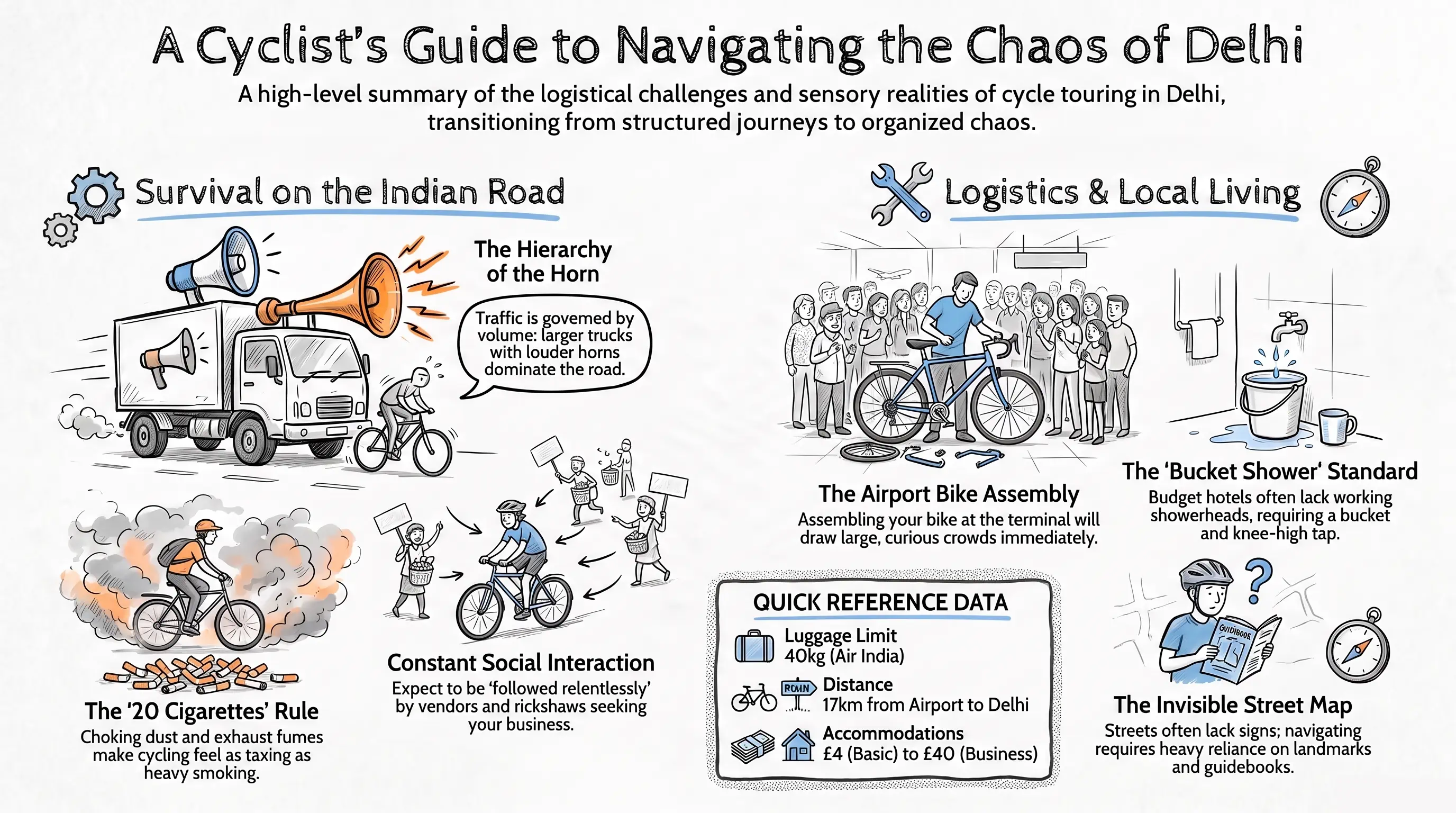
On checking in, panniers and bike came within the 40kg luggage allowance so didn’t incur any extra charge.
Keep water purification tablets accessible in your day pack during the route.
Make sure you heed this warning or what will happen will a do you!.
Delhi Airport
I was surprised to find Delhi airport so modern, moving escalators and decent decor. Although the shops and outlets scattered around the great halls were not on par with London, they were impressive and inviting.
I waited for my luggage to come down the conveyor belt and after a while the bike came down followed by the panniers, everything looked intact. I loaded the bike and panniers onto a trolley and changed some money (careful when changing money, they count quickly and there are a lot of notes). I then wheeled the trolley to the door aiming for what looked like a small taxi area to assemble the bike. The heat hit as soon as the doors opened, it was scorching and the smell, it smelt like a landfill on a hot day, a really awful smell of decaying waste.
My first glimpse of India was a little shocking (even though I’d been warned about the culture shock), at this point I should have left the bike in the box and got a taxi to a hotel. But I opened the box and removed and assemble the bike, which only consisted of attaching the pedals and straightening the handlebars, about a dozen people gathered to see what I was doing.
The bike was soon assembled, and the crowd began to lose interest and disperse, mainly back to their taxis. One of the taxi drivers organised the removal of the box by calling over a cleaner and telling him to remove the box, he did so by leaving it against the nearest wall.
With the bike assembled and the panniers secured I headed for the distant muffled roar of the main highway into Delhi.
Those Famous Indian Roads
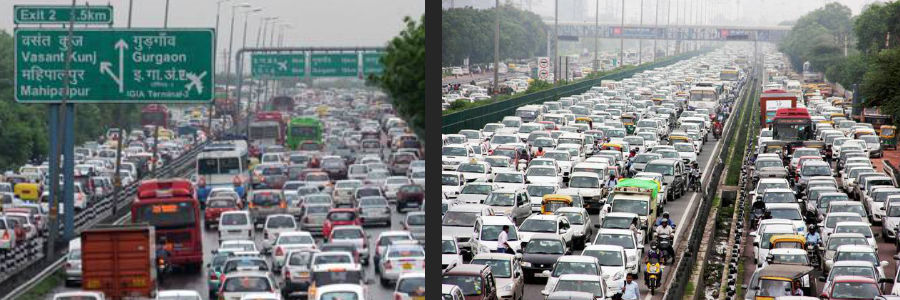
The sun was hot and the air thick with dust, choking dust. I set off ready to take on the famous Indian roads I’d heard so much about. Thankfully, they drove on the left, I didn’t want to have to get used to the crazy traffic and cycle on the right. After leaving the comparatively quiet roads of the airport I joined the traffic on the major road into Delhi.
They are crazy drivers, everything I’d heard about Indian roads was true, they drive with their horn’s, the sound was deafening and aggressive. The bigger the truck and louder the horn gets you ahead, every other vehicle gives way and I, a mere cyclist and being way down the hierarchy, found myself regularly driven off the road.
Delhi was 17km, the dust in the air was over-powering and after 5 minutes I was coughing and spluttering, it felt like I was smoking 20 cigarettes an hour. The landscape was scruffy and smelly and the roads looked so un-organised it was unbelievable. The smell of the sewers and rubbish from the side of the road was sometimes overpowering.
The vehicles were old and battered, especially the trucks, and I was probably the only engineless vehicle on the road and attracting a lot of attention. I soon found out that there were very few western cycles in India. The flow of traffic was slow but intense, bumper to bumper as though they were pushing each other into Delhi.
I missed my turning and ended up circling Delhi (at least it seemed like it), looking for a hotel but there were none. Different people back in the UK told me that hotels in India were ten a penny, I couldn’t find one and it was getting dark.
With all this riding around the busy streets of Delhi I began to pick up some of the rules of the road. The main weapon needed was a loud horn. You then have to push your way through the traffic, edging, pushing into any available space. It seems you are allowed to cut-up as many other road users as it takes to get ahead, yet I never witnessed any road-rage. At red lights you can turn left but you must wait to go straight on or when turning right (as you’d expect, but being able to turn left was useful). Drivers use their horns to show intention, they blast their horns signalling I‘m coming through so get out of the way.
My First Hotel
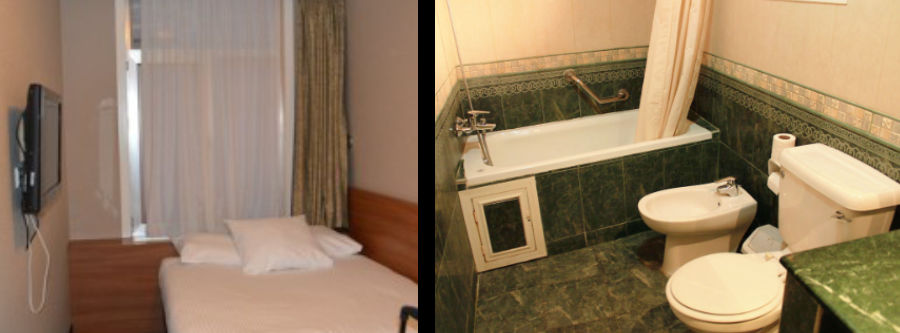
I eventually found a hotel 10 km from the centre, within a business park and what a dump, it cost £40.00 a night with breakfast, which consisted of toast and jam with coffee. I thought they’d overcharged me being a tourist, but they had wi-fi access, so I looked up the hotel on the internet and the found the price was right.
The room had too much furniture, but nothing matched. There was a wardrobe, set of drawers, a table and chairs placed against the walls where there was space. The walls were heavily plastered and painted white and starting to look a little grubby. The double bed was hard with bed sheets that looked heavily starched and uninviting with a grubby pillow. A couple of paintings hung on the walls of different Hindu gods. The whole room looked shabby but I was to find this was a typical budget hotel room in India.
The bathroom, I also was to find, was a typical India bathroom. The big, modern but plain sink wasn’t fixed down so you had to be careful if you leaned on it for support. The sink had one working tap which happened to be the cold one. The toilet was a western pan with a flusher which didn’t work so you had to flush using the medium sized bucket provided. There was a cold tap at knee height which I was to find, was the most important tap. The tap along with the supplied bucket is used to flush the toilet and to aid you to have a bucket shower as the official shower’s taps rarely worked. The bathroom had a tiled floor much like a wet room with the non-working shower at the end with a drain but no shower base. Turning on the shower taps produced no water but the knee high tap was nearby. Showering consisted of filling the bucket with warmish water, as I believe the water tank was located on the roof and warmed by solar panels. Even though the room temperature was around 30 C, pouring the bucket of water over your head was little shocking, it took 3 or 4 buckets before I got used to it.
A big ceiling fan cooled the bedroom that looked a little insecure. I used to lie on the hotel beds thinking would one ever fly off, they were on all the time including through the night. The first night I managed to sleep under one blanket, but it felt grubby and hard. I soon purchased a sarong and stopped using the hotel bedding but in the early hours of the morning I always woke up chilly. It became a early morning ritual to turn off the fan and then to see how long I could sleep before it got too hot. I was getting up around 7am if cycling or between 8 and 9am on rest days.
Most of the hotels I used were on the cheaper side, paying as little as £4 for a room in some cases and some even cheaper these were basic, just a room with a toilet and tap. Some hotels were good value and some you got what you paid for. India does offer many top star hotels with quality service and I did sample them on one or two occasions when hotels were scarce, usually off the tourist track. I always found these hotels clean and comfortable and nearly always had air conditioning, ( I could never get on with air conditioning and always ended up turning it off ).
First Indian Curry
In the evening I decided to search out some food. The area seemed to lack any shops, plenty of hotels, some big hotels which would probably have had a restaurant but I decided to go for a walk and see If I could search out a restaurant.
It was dark and the street lighting poor or non-existent as I walked into the back streets. Everywhere looked the same I couldn’t tell one street from another so I had to be careful and try and remember some landmarks. The area, made up of small business units was quiet except for dogs barking which was a little unsettling as I couldn’t see them.
After what seemed like ages and not finding any signs of life, (unusual for India), I came across a bit of waste ground with a few cars parked up. In the centre was a scruffy hut that was lit up with dim lighting that looked brighter because of the lack of lighting in the immediate area. People were going in and out with what looked like takeaway meals.
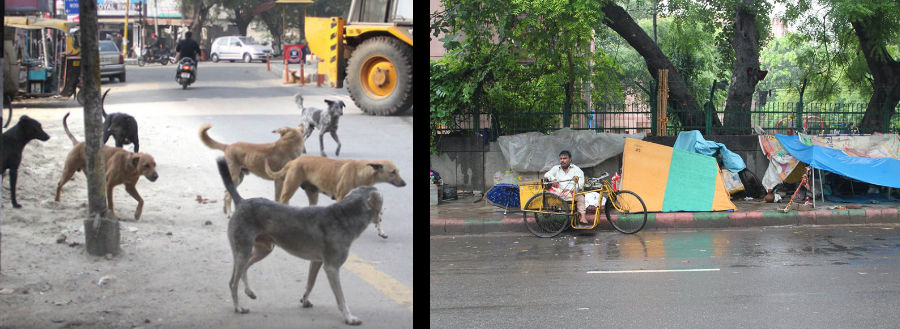
There were many dogs around making a lot of noise and fighting with each other. They looked half-wild, I was to find out most dogs in India are half-wild and look more like dingos. They roam around in large packs, making a lot of noise, sometimes annoying when they stray near your hotel at night, sleep becomes impossible. The dogs never bother people, I only ever remember a dog barking aggressively at me once while touring and there are many, many dogs.
I went into the hut to order a chicken curry, I couldn’t read the menu so hoped the guy I spoke to could understand a little English. He did and asked how spicy I wanted my curry?, in India people don’t seem to have hot curries, they go more for taste. There were no seats inside so I waited outside watching the dogs continually fight each other for domination. Most of the customers watched me from their cars while eating and most of them were on the younger side, (boy racers?, I don't think so, the cars said no). I was drawing a lot of attention which started to feel a little uncomfortable. The guy came out with my food. His English was good, he gave me the food and a business card, saying “If you want any food again, ring, we will deliver it”, he carried on saying words to the effect of its not safe to walk around this area.
The walk back to the hotel didn’t seem to take as long as the walk to the restaurant/hut, but there again it never does. Everywhere really does look similar, with the dim street lighting not helping.
Back at the hotel I watched television (lots of films in English on the Hobo channel), while eating my first curry in India, and it was excellent.
Day 2 in Delhi
The next day I took a tuk- tuk up to ‘India Gate’, and Connaught Place (CP), this is the tourist area with plenty of shops and hotels. The tuk-tuk dropped me off at ‘India Gate’ he then said ‘I wait here for you and then I show you ‘President’s Palace’ and then I show you this and that‘. They end up trying to plan your day, I decided I didn’t want him after seeing ’India Gate’ and reluctantly he left. I walked slowly around the area taking in the impressive landmarks. I’m not really a monument person and soon tire of walking around in uncomfortable heat taking photos that have been taken thousands of times before. I was constantly approached by souvenir salesmen selling cheap looking replicas of India Gate and other notable places in India. Everybody seems to want to sell you something, and they are determined, they never give up. Walking past shops and constantly being invited to look inside, the worst offenders seem to be the ‘Rickshaw cycles’. They will keep on at you relentlessly, trying to strike up a conversation with you, be your friend, they don’t give up easily. It’s impossible to escape them but the plus side is there is so many of them you can get around very cheaply.
Cycling or walking it’s easy to get lost in Delhi because there are no signs and all the streets look the same, all busy and full of small shops and markets. Shopping is not as easy as back home, there are no superstores, you have to search out every item in small shops and then if you want you can haggle the price (most of the time the price is so cheap it’s not worth haggling, tourists are always charged a few rupees extra). Every bit of space is taken by somebody selling something, from a posh looking lock-up shop (very few in India) to a man sitting under a blanket on the kerb edge, with a kettle selling tea. They are prepared to sit there all day and night to earn a few rupees, (you have to admire their perseverance, something you’d never find in the western countries). The streets are strewn with litter and people sleeping and begging on the road edges. It’s sad to see but you have to ignore their pleading, held out hands because there’s just too many of them.
I didn’t take to Delhi and was glad to leave after just two days, the place is too big with too many people. The constant hassling started to get annoying but it’s something you have to get used to, it’s a way of life in India. I was getting restless, I wanted to start cycling and explore this simple and complicated place.
If I went again:
- Research Delhi more.
- Change money before you go, if you can, they count the money too quickly at the airport and there are lots of notes.
- Get a taxi to the hotel, and find out the going rate from other tourists or books like the ‘Lonely Planet’ guide.
- Try to get a suitable street map of Delhi (Google maps)
- Take ‘Lonely Planet’ guide (a guide book is essential for finding tourist areas)
Comments (0)
Leave a response